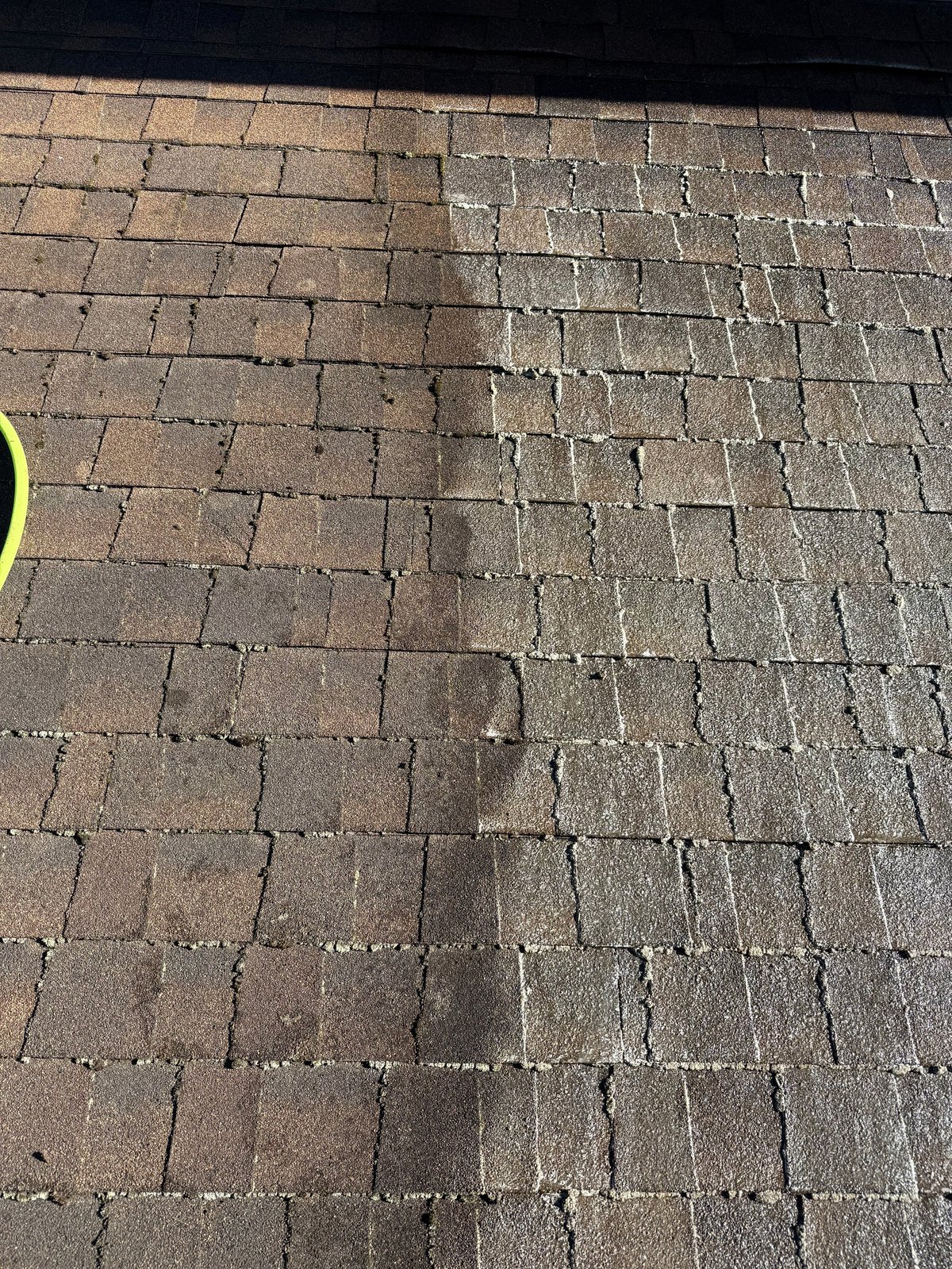
That pressure washer might seem perfect for blasting moss off your roof, but high pressure can damage shingles. Soft wash roof cleaning is the industry-recommended approach for one simple reason: it works better and is gentler on the roof.
Critical Warning
ARMA (the Asphalt Roofing Manufacturers Association) recommends low-pressure washing with appropriate cleaning solutions, rather than high-pressure washing, for asphalt shingles. The force of high pressure can damage protective granules and shorten roof lifespan.
Warranty terms vary by manufacturer, so check yours, and we're happy to review it with you. Before you reach for that pressure washing equipment, consider what soft wash can do instead.
What is Soft Wash Roof Cleaning?
Soft wash uses low-pressure water combined with specialized cleaning solutions to kill moss, algae, and lichen at the root level. Instead of blasting debris off with force, soft wash dissolves organic growth chemically.
Key Differences:
Soft Wash
- • 40-80 PSI (low pressure)
- • EPA-approved chemicals
- • Kills growth at roots
- • Results typically last longer
Pressure Washing
- • 1,500-3,000+ PSI (high pressure)
- • Water only
- • Removes surface only
- • Regrows in months
The Dangers of Pressure Washing Roofs
1. Granule Loss = Premature Failure
Asphalt shingles have protective granules embedded in their surface. These granules shield against UV rays and weathering. Pressure washing can strip these granules away. High pressure can strip protective granules and expose the asphalt layer underneath, which can shorten shingle life. Soft washing uses low pressure to help protect granules while removing organic growth. Professional roof soft washing protects your investment.
2. Water Intrusion
High-pressure water forces itself under shingles and into roof decking. This hidden moisture leads to:
- Wood rot in roof decking
- Mold growth in attic spaces
- Insulation damage
- Interior ceiling stains and leaks
3. Shingle Lifting & Tearing
The force from pressure washing can lift shingle tabs, break seals, and even tear shingles completely. These compromised areas become entry points for water, leading to expensive leak repairs. Expert roof cleaning avoids this damage.
4. Temporary Results
Pressure washing only removes visible surface growth. Moss roots remain embedded in shingles and regrow within 6-12 months. Professional soft wash treatment eliminates roots for lasting results.
Why Soft Wash is Superior for Fraser Valley Roofs
1. Kills Growth at the Root
Professional soft wash solutions penetrate deep into moss, algae, and lichen, killing organisms at their root systems. Soft washing targets growth at the root so results typically last longer than surface-only pressure washing, which often sees faster regrowth in damp Fraser Valley conditions. Exact timing varies by shade, moisture, and roof condition. Roof soft washing in Chilliwack provides long-term protection.
2. Preserves Shingle Integrity
Low-pressure application helps granules stay in place and shingles remain sealed. Your roof looks clean without the wear high pressure can cause. ARMA recommends low-pressure washing with appropriate cleaning solutions for asphalt shingles, and warranty terms vary by manufacturer. Safe roof cleaning protects the surface without that wear.
3. Perfect for Chilliwack's Climate
The Fraser Valley's damp climate creates ideal conditions for moss and algae. Soft wash is specifically designed for moisture-rich environments where organic growth thrives.
Chilliwack homes with north-facing roofs or tree shade see the best results from soft wash. Professional roof cleaning services prevent regrowth even in consistently shaded, damp areas.
4. Cost-Effective Long-Term
While soft wash can cost more upfront than a pressure-only clean, longer-lasting results and avoided damage often make it the better value. Pricing depends on roof size, pitch, access, and growth. We confirm your exact price in writing after a free walkthrough. Expert soft wash services save money over time.
The Soft Wash Process
- Inspection: Identify problem areas, check for existing damage
- Pre-treatment: Protect landscaping, cover plants and shrubs
- Application: Apply biodegradable cleaning solution at low pressure
- Dwell time: Allow 15-20 minutes for solution to work
- Rinse: Gently rinse with low-pressure water
- Post-treatment: Inspect results, ensure complete coverage
When to Choose Soft Wash vs. Pressure Washing
✓ Use Soft Wash For:
- • Asphalt shingle roofs
- • Cedar shake roofs
- • Tile roofs
- • Any roof with moss/algae
- • Roofs under warranty
✓ Pressure Wash Is OK For:
- • Concrete driveways
- • Brick walkways
- • Stone patios
- • Vinyl/Hardy siding (low PSI)
- • Fences and decks (with care)
Bottom Line:
If it's on your roof, use soft wash rather than high pressure. Pressure washing is for hard surfaces at ground level, not delicate roofing materials.
DIY Soft Wash? Think Twice
Professional soft wash requires specialized equipment, proper chemical ratios, and safety training. Expert roof cleaning contractors have the proper training. Incorrect dilution can damage shingles or landscaping, and working on roofs is dangerous without proper safety equipment.
Professional Soft Wash Roof Cleaning in Chilliwack
Gutter'Dun Home Services uses industry-leading soft wash techniques to safely clean your roof without damage. We're fully insured, experienced with Fraser Valley roofs, and guarantee results that last years—not months.