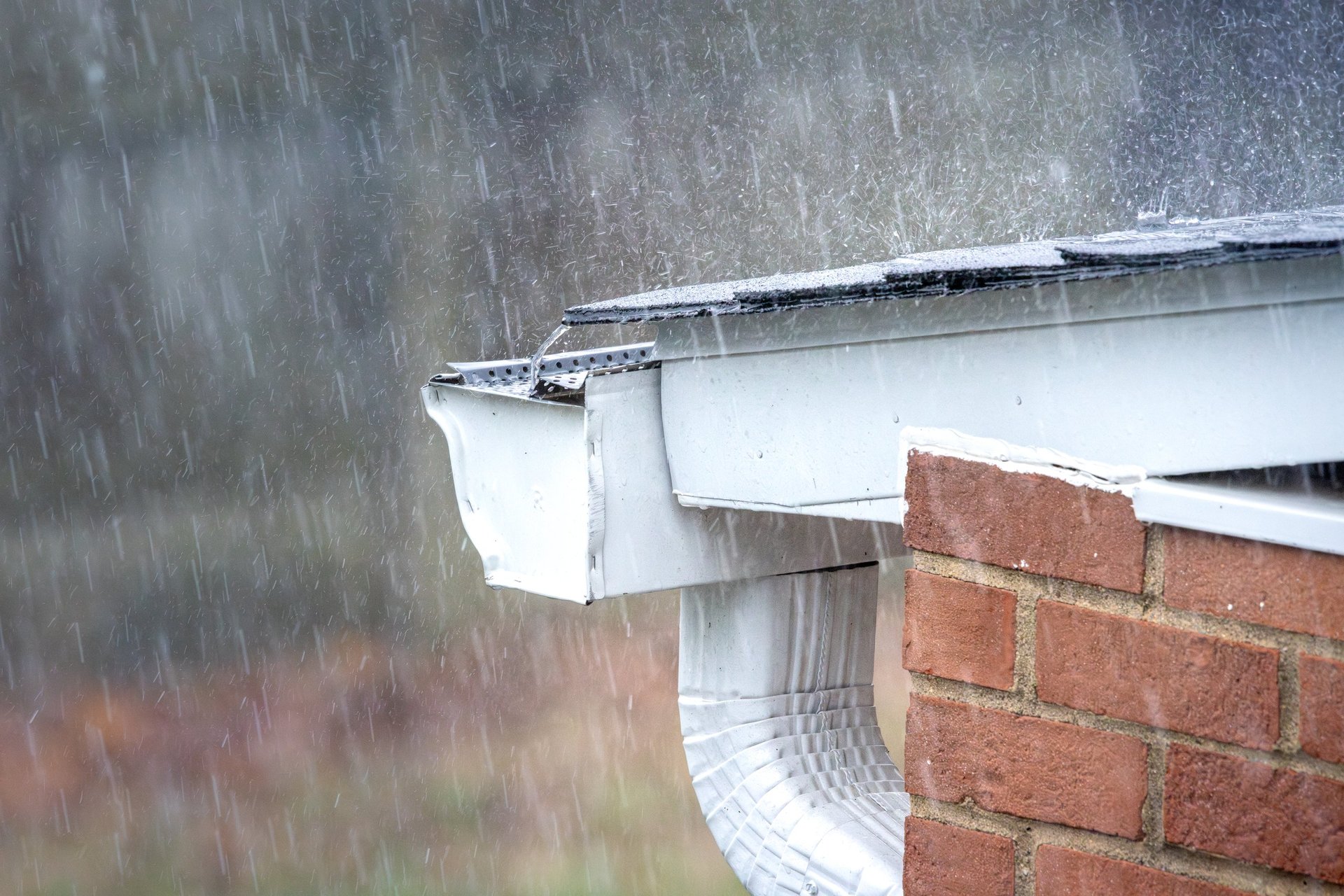
Most gutter problems in Chilliwack don't show up on a sunny afternoon. They show up during the first long, heavy rain of the fall, after the leaves have dropped. That's when a gutter that looked fine in August starts spilling over the edge, a downspout goes quiet, or water starts pooling against the foundation.
The good news: you can learn a lot about your gutters in ten minutes, from the ground, with an umbrella. No ladder required. Here's what to look for.
1. Water spilling over the front edge
Walk around the house while it's raining steadily. Water pouring over the outside edge of a gutter, especially in one spot, usually means a clog downstream: leaves, needles or roof grit have built up and the water has nowhere to go. Spills right at an inside corner are common, because debris collects where two runs meet.
2. A downspout that's dry or just trickling
In a real downpour, every downspout should be running hard. If one is dry or barely dripping while the gutter above it is full, the blockage is usually at the top opening or at an elbow partway down. Mark which downspout it is so you can point it out.
3. Water behind the gutter
Look for drips coming from behind the gutter, between the gutter and the fascia board. That can mean the gutter has pulled away, the flashing isn't directing water into it, or the trough is so full it's backing up. Over time, water there can soften fascia and soffits. Our post on gutter seam repair and rot explains why it matters.
4. Drips from seams and corners
Steady drips from the joints between gutter sections, rather than over the edge, usually point to a failed seam. That's a repair issue, not a cleaning one, but it's worth catching now rather than after a winter of drips.
5. Sagging sections
A gutter that sags in the middle or pulls away from the house will hold water and debris instead of draining. Heavy, wet debris makes sagging worse, so a sag in the fall is often a sign the gutter is overloaded.
6. Where the water goes at ground level
Downspouts should send water away from the house, not into a puddle beside the foundation. If you see pooling, erosion in a garden bed, or splash marks on the siding near a downspout, the outlet needs attention, whether that's an extension, a splash block or a cleared drain connection.
What to do with what you find
- One small spill and the rest is fine: note it and plan a cleaning before the rain gets heavier.
- Several spills, a dead downspout, or water behind the gutter: the gutters are likely full. Book a cleaning soon, since winter rain will only add to it.
- Sags, seam leaks or water at the foundation: mention these when you ask for a quote so we can check them during the visit.
Please don't climb a wet ladder
Don't climb a wet ladder in the rain to fix it yourself. Wet rungs, slick roof edges and a full gutter you're leaning on are a bad mix. Our post on DIY gutter cleaning risks covers why.
How we can help
Our gutter cleaning includes hand removal of debris, downspout checks and a full cleanup, with optional gutter brightening. If you're not sure how often your home needs it, our seasonal gutter guide breaks it down, and the cost guide shows what to expect.
Spotted a problem during the last rain?
Call or text (250) 371-1474, or send a photo through our contact page. Gutter'Dun Home Services is WCB certified, $5M insured and serves all of Chilliwack and the Fraser Valley.
Related reading: when to clean your gutters, the hidden costs of clogged gutters, and winter home preparation.